Adrian Johnson Farm Dispersal Sale Report
Following his decision to retire from farming and travel the world with his wife, Adrian Johnson kindly instructed Howkins & Harrison to


Demand for land for both battery storage and solar farm sites has intensified over the last 12 months. In areas where grid capacity is available the majority of landowners will have had an approach from solar or battery developers. Whilst there is an awful lot of mud being thrown at the wall by developers (a lot with no track record of success,) in the hope that some of it sticks, there are good developers in the market and good sites which do stand a genuine chance of being built. The proportion of sites which actually end up being developed is still very small compared to the number of approaches made.
The first stage of the process is that the landowner will be asked to sign a ‘Letter of Authority’ (LOA), which is confirmation that the developer has the landowner’s approval to apply to the Distribution Network Operator (DNO) for a grid connection. The LOA seems fairly innocuous at first glance and the developers are keen to point out that the permission to apply for a grid connection can be revoked at any time. The catch, however, is that if there is a lot of demand for the available grid capacity, the developer’s application can go into a queue and if the landowner subsequently wants to switch to another developer, they lose their place and go to the bottom. This can be a disincentive to negotiate hard and change to another developer who may be offering better terms. It is possible for the landowner to obtain the grid offer in their own name, but this is expensive and risky.
Due to grid issues at local level, we are seeing increased interest from developers looking to connect much larger schemes at National Grid level, bypassing the LOA process. Some developers are in it for the long term, in that they will build out and operate sites themselves. Others, however will get a planning consent and a viable grid connection offer and then seek to sell the project on. Care needs to be taken to make sure that the landowner is not left waiting for the scheme to be built, with no rent coming in.
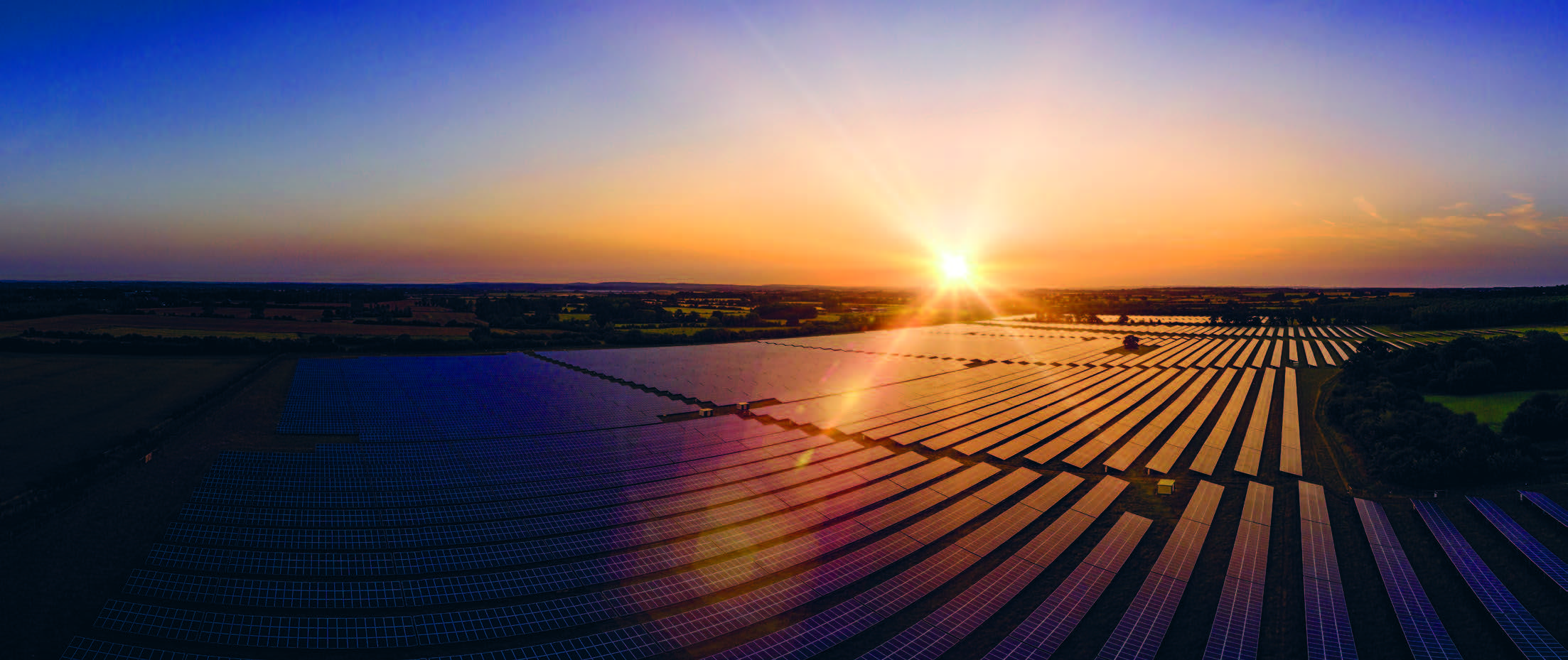
A major issue at present is that, due to network capacity issues, grid connection dates can now be as far as 10 years in the future. This could mean having to sit on a site with a grid offer and planning permission for a long time before any rent is paid. The DNOs and National Grid are trying to bring these connection dates forward but this relies on new infrastructure.
Councils are coming under pressure from a climate change perspective to grant consent for solar schemes, but need to still balance this against the use of ‘Best and Most Versatile’ (BMV) land, which is Grade 3a and above. Although the climate change argument is becoming more powerful in local politics, recent appeal decisions have confirmed that schemes on predominantly BMV land will struggle. If sited well, battery storage schemes can be less contentious than solar schemes, using less land per MW. We are finding that these sites can sometimes go under the planning radar. Local opposition to renewable energy schemes is patchy and a lot depends on the visual impact and the nimby factor.
Currently we are seeing rents offered in the £2,000 – £2,500 per MW region for battery storage sites and £1,000+ per acre for solar. With a requirement of about 15MW per acre for a battery site, these are often much more attractive from a landowner’s perspective in terms of return on land value.
We currently have over 20 solar/battery schemes in negotiations, so if you have had an approach from a developer and need advice, please get in touch.
James Collier | james.collier@howkinsandharrison.co.uk | 01827 721380


Following his decision to retire from farming and travel the world with his wife, Adrian Johnson kindly instructed Howkins & Harrison to
The agricultural sector continues to evolve at pace. Changing policy frameworks, market pressures and the growing need for operational ef...

The winter of 2001 remains memorable, not only because the UK was dealing with the foot and mouth epidemic that significantly affected


"*" indicates required fields