Growing Our Talent from Within: Celebrating Internal Prom...
At Howkins & Harrison, our people are at the heart of everything we do. We are delighted to celebrate four well-deserved internal


A little known fact about one of our senior members of staff, Michael Fallowell, is his love of Carriage Driving. Carriage Driving is an equestrian sport where the driver sits on a vehicle drawn by a single horse, a pair of horses or a team of four. Competition is split into three phases: dressage, cross-country marathon and obstacle cone driving, and is most similar to the mounted equestrian sport of three day eventing. It is one of the ten international equestrian sport horse disciplines recognised by the Fédération Équestre Internationale (FEI); having become a recognised discipline in 1970.
H&H Rural Consultant, Michael Fallowell, and his wife, Pat, took up carriage driving in the 1980’s and spent over 25 years on the competition circuit, rising to the heady heights of National Novice Champion (single horse) in 2007 in competitions held by the British Horse Driving Trials Association, which has since become known as British Carriage Driving.

Events are split into three sections, and also into classes, by the number of horses being driven by the driver and groom, who is the person who hangs off the back of the carriage to ensure the wheels remain grounded around corners. Michael and Pat would take year-about turns as driver and groom, until Michael took national success and claimed the seat as his own, competing at national level until his retirement from the competitive sport in 2012.
The dressage test is somewhat similar to the dressage events in a three-day event. The test is performed in a 40 by 80 or 40 by 100 metre arena with letter markers, where transitions in speed and gait are to take place. The judge scores each movement and the difficulty of the test increases with each subsequent level of competition. The movements may include circles, figures of eight, crossing the diagonal and at all paces. Michael usually drove a single horse, although he did spend some time training in both the tandem (a pair of horses) and team (four horses positioned in two pairs) events, although not competitively.
The marathon is similar to the second phase of eventing, the cross country, – and is a test of speed and endurance, the fitness, and stamina of the horses, and the driver’s knowledge of pace, over a 10–22 km course, divided into 3 or 5 sections. The marathon was Michael’s favoured section and draws the biggest crowd. The sport’s most famous athlete, the late Prince Philip, Duke of Edinburgh, was a regular attendee at events throughout the country (although notably never at Windsor for reasons unknown) and would be found alongside all other competitors understanding the course, judging the dressage or in the post event refreshment tent.
The marathon includes obstacles or “hazards” throughout the course to test the speed and agility of the horses, and the driving ability of the whip. Obstacles usually include a mixture of water, tight twists through trees or man-made obstacles, steep hills, or fences and pens. Drivers are scored on how quickly they can negotiate the obstacle and must find the fastest route through each. Penalty points are given if too much time is spent in an obstacle, or if the team takes longer to complete the course than is set.
The final event, the obstacle cone driving phase, is a test of accuracy, speed, and obedience, equivalent to the show jumping phase of eventing. Competitors walk the cones course before they drive it. The driver negotiates a course of up to 20 pairs of cones, each cone having a ball balanced on top. The cones are only the width of the carriage wheels plus 50 cm either side at the lower levels, down to only 22 cm at the advanced singles level, and of course, knocking over one or both of a pair of cones adds penalties to the driver’s score. Fast paced and technical, this final stage crowns the final winners of a competition.
Michael and Pat toured throughout the UK competing, creating memories and lifelong friendships. Most memorable courses were at Hopton, north of Edinburgh, where the cross country (marathon) course headed along the side of the loch and up to the top of a hill, overlooking the Firth of Forth. The events at Sandringham saw the carriages driven through the garages and lavender fields (and of course Prince Philip was a regular at these events).
Although full of great memories, there are some hairy moments in the events that Michael recalls, one such time was when Pat was on the back of the carriage, and he drove onto a fence. Both were thrown out and their horse bolted. Mike’s next memory was of a St John’s Ambulance first aider leaning over him telling him not to move in case he had broken his back. Anyone who knows Mike would not be surprised by his response along the lines of, ‘don’t be so ridiculous, I can feel my legs, get out of the way and let me get up and catch my horse…’ although luckily others on the course had spotted and caught the runaway before he’d made too big a dash for it!
Despite his national success, for which Mike is rather humble, he and Pat retired from competing when Mike decided that his horse, Duke, was quicker than he was. ‘Driving is as much a strategic enterprise as it is a physical sport’ Mike explains, ‘As a driver, you need to be one step ahead of the horse in thinking and action. When Duke was outsmarting me with his movements, I knew it was time to hang up my hat. But I still watch the circuit and meet lifelong friends at events across the country.’
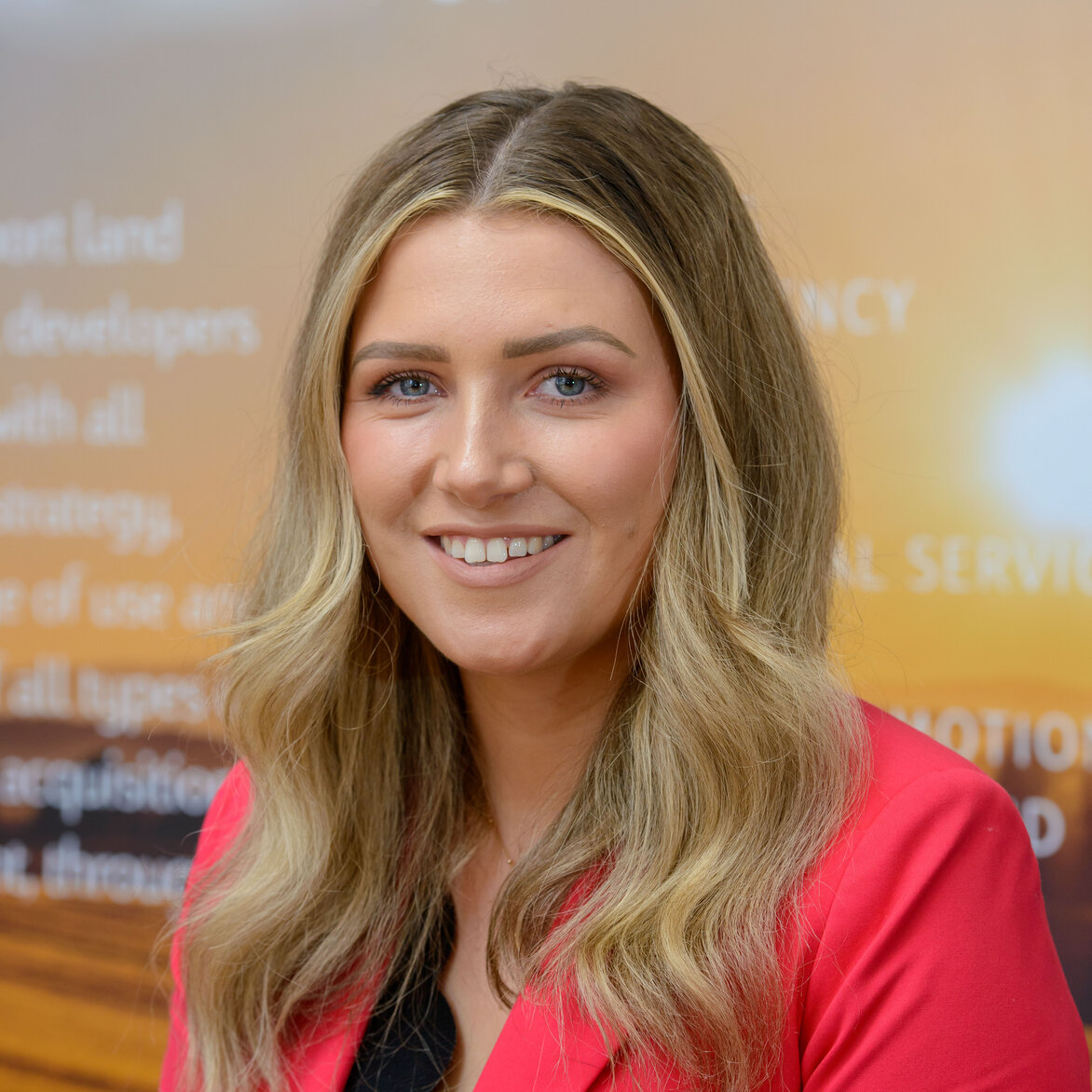

At Howkins & Harrison, our people are at the heart of everything we do. We are delighted to celebrate four well-deserved internal

The winter of 2001 remains memorable, not only because the UK was dealing with the foot and mouth epidemic that significantly affected

Fantastic News from Our Rural Team! We’re delighted to announce that four of our graduate rural surveyors have successfully passed their ...


"*" indicates required fields